
Tucson Water Damage Restoration Champions
Burst Pipe Water Damage Cleanup in Tucson, AZ | Pressurized Leak Recovery
A split supply line can release hundreds of gallons before you notice; we remove the water and dry what it soaked.
- Free inspection
- Direct insurance billing available
- IICRC-certified technicians
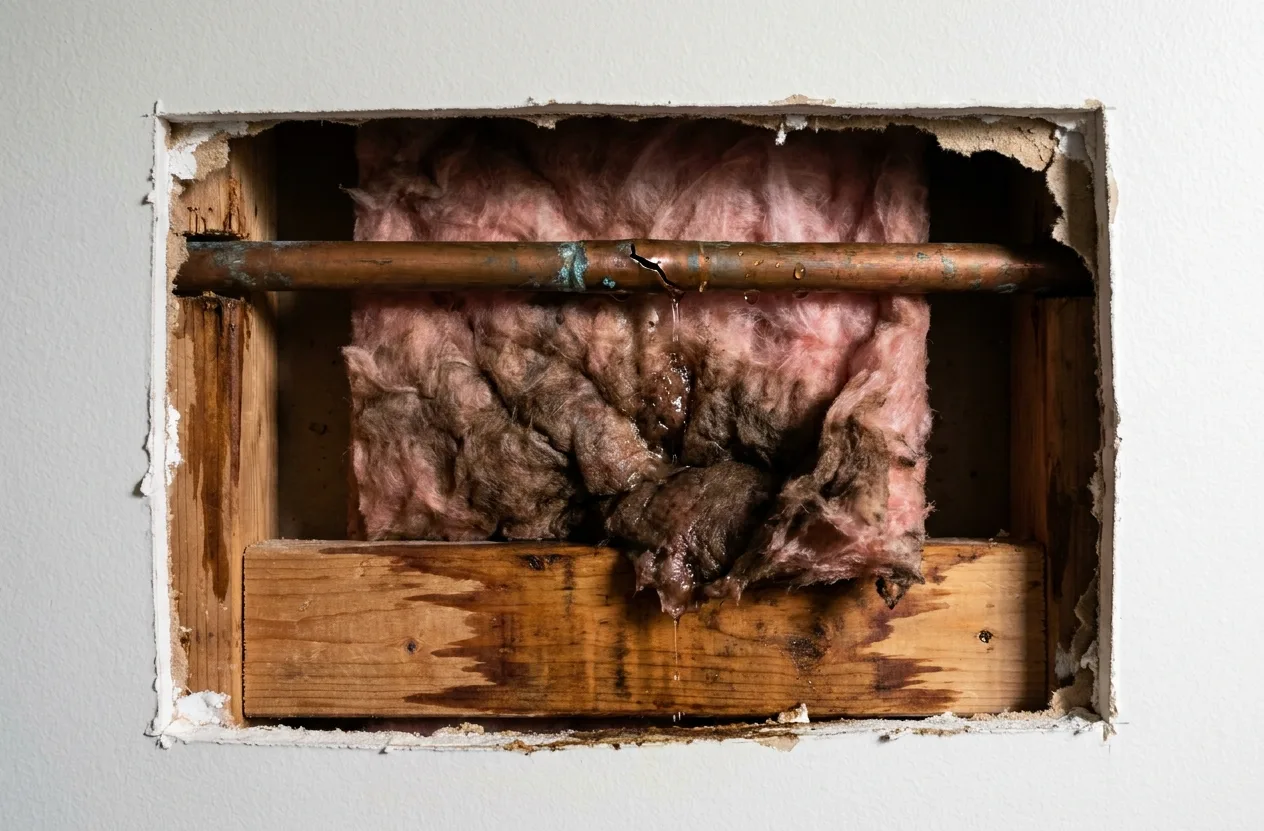
A pressurized water line doesn't drip politely. When a pipe splits or a fitting blows off, water flows at full household pressure until someone closes the main valve. Within minutes it can saturate a ceiling, run down inside a wall and spread under cabinets, tile and laminate.
First, shut off the water at the main and, if water is near outlets or fixtures, cut power to that area. Then call a plumber for the repair and call us for the damage. Those are separate jobs, and the sooner both start, the less you end up replacing.
Water from a broken supply line starts as Category 1 under the IICRC S500 standard, meaning it is clean at the source. Clean water losses let us dry more materials in place instead of tearing them out. It doesn't stay clean forever, though, so speed decides how much we save.
- Water Damage Restoration
- Water Damage Assessment and Inspection
- Insurance Claim Assistance for Water Damage Restoration
- Emergency Water Extraction Services
- Structural Drying Services
- Mold Removal
- Sewage Backup Cleanup
- Slab Leak Water Damage Repair
- Water Heater Leak Cleanup
- Swamp Cooler & AC Leak Water Damage
- Monsoon Storm & Flood Damage Restoration
- Roof Leak & Ceiling Water Damage Repair
- Wet Carpet & Pad Drying
- Hardwood Floor Water Damage & Drying
- Drywall Water Damage Repair
- Water Damage Odor Removal & Sanitizing
- Contents Pack-Out & Restoration
- Commercial Water Damage Restoration
- Water Damage Reconstruction & Rebuild
Our Burst Pipe Water Damage Services
Water Extraction From Floors and Carpet
We start by removing standing water with truck-mounted or portable extractors. On carpet, weighted extraction tools press water out of the pad, which can often be saved when the water was clean and help arrived quickly. On tile and concrete, we pull water from grout lines and baseboard edges.
Laminate and engineered flooring behave differently. Water slides under the planks and sits on the slab or underlayment where it can't evaporate. We check beneath with meters, then decide whether specialty drying mats will work or the planks must come up so the substrate can dry.
Ceiling and Overhead Leak Recovery
When a supply line runs through the attic, the damage shows up overhead first. A sagging, stained ceiling may be holding gallons on its back side. We relieve that safely by puncturing a controlled drain point and catching the flow before the drywall gives way on its own.
Wet attic insulation compresses and holds moisture against the ceiling for days. We remove soaked batts or blown insulation, inspect joists and top plates, and dry the cavity with directed airflow. Ceiling drywall that sagged or lost strength is cut out, while firm panels can often stay.
Drying Inside Wall Cavities
A line that bursts inside a wall soaks insulation, studs and the back of the drywall long before the paint shows a mark. Thermal imaging traces the cool, wet pattern and a moisture meter confirms it. Then we choose between drilling small vent holes or opening a section.
When the drywall is sound and the insulation only damp, injection drying systems push warm, dry air through small holes and spare you a bigger rebuild. When insulation is soaked, we remove the lower drywall so the framing dries and nothing stays trapped behind a patch.
Cabinet, Vanity and Built-In Drying
Kitchen and bath supply lines often fail right under a sink, sending water into the toe kick space beneath base cabinets. That pocket is closed on every side, so it stays wet a long time. We pull toe kicks and, when needed, drill the cabinet floor to push dry air underneath.
Particleboard cabinet boxes swell when soaked too long, while plywood usually recovers. We tell you which you have and try drying in place before suggesting replacement. Countertops stay put whenever possible, because removing stone or tile tops tends to add damage and cost of its own.
Our Burst Pipe Water Damage Cleanup Process
Confirm the Water Is Off
On arrival we make sure the main or local valve is closed and the broken section is isolated. If no plumber has been called yet, we tell you so you can line one up. Then we check for electrical hazards around ceiling lights before anyone walks under wet drywall.
Map the Spread
Water from a pressurized break travels farther than it looks. Moisture meters, a thermal camera and a hygrometer show how far it moved through floors, walls and ceilings and how much moisture hangs in the air. That map sets the drying class and the equipment count.
Extract, Open and Set Equipment
We extract standing water, remove materials that can't be dried and open cavities where water is trapped. Air movers and LGR dehumidifiers go in to match the drying class, plus injection systems for walls and cabinets. Large spreads may also call for emergency extraction.
Monitor Until Dry
We return regularly to record readings, reposition air movers and check dehumidifiers as the moisture load drops. When framing, subfloor and drywall match an unaffected area of the house, we remove the equipment, share the final log and outline any drywall, flooring or paint work still needed.
Why Choose Us for Burst Pipe Water Damage Cleanup
We Separate the Plumbing From the Restoration
We don't fix pipes and don't pretend to. Your plumber repairs the line; we handle extraction, demolition and drying. Keeping those roles clear helps your claim, since most policies treat sudden water damage differently from the pipe itself, and each part goes to people who specialize in it.
Drying Decisions Backed by Readings
Every drying plan starts with moisture mapping and ends when the numbers say so, not when the calendar does. We take readings at set points on each visit and record them, so you can watch progress day by day. That data tells us when to move equipment or open a wall.
Help With the Paperwork
A burst pipe claim needs proof of when it happened, what got wet and why each repair is needed. We photograph the break, the affected areas and the readings, then share the log with your adjuster. We can also explain how claim assistance works before you file.
How Pipes Fail in Tucson Homes
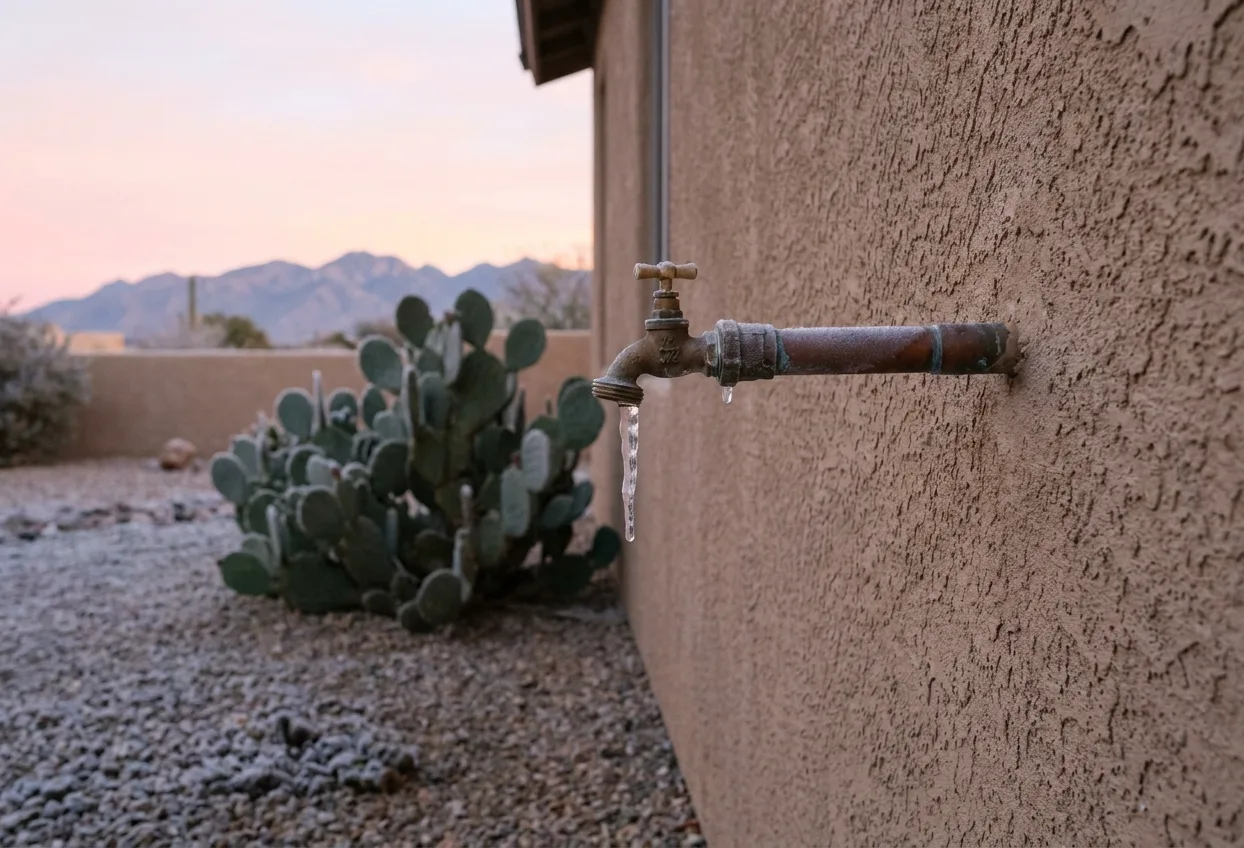
Freezing nights are rare here, but not absent. Tucson typically sees about three hard freezes each winter, with lows in the mid or low twenties, enough to split an exposed hose bib, an outdoor supply line or a pipe in an unheated garage or attic.
Hard water causes slower failures. Tucson Water notes that blending local groundwater with Central Arizona Project water raises hardness, and mineral scale builds inside fittings, valves and flexible supply lines. Add summer attic heat and plastic connectors under sinks, and a burst can follow years of quiet wear.
What Burst Pipe Water Damage Cleanup Costs in Tucson
Your cleanup cost depends mostly on how long the water ran and how many building materials it reached. The figures below are typical ranges for the restoration side only, not a quote, and they leave out the plumber's bill for repairing the broken pipe itself.
A break caught within minutes in one bathroom sits at the low end. An attic line that ran for hours over several rooms lands higher. Homeowners policies commonly cover sudden bursts but often exclude slow, long-term leaks, so tell your adjuster exactly when you found it.
| Scope | Typical range |
|---|---|
| Inspection and moisture mapping | Free |
| Emergency water extraction | Starting at $500; most jobs $1,000–$4,500 |
| Burst pipe cleanup (excl. plumbing repair) | Most jobs $1,500–$7,500 |
| Drywall repair after drying | Starting at $500; most jobs $1,000–$4,000+ |
Burst Pipe Water Damage FAQs
What should I do first when a pipe bursts?
Close the main shutoff valve, usually where the line enters the house or near the meter. Turn off power to any room where water is near outlets or light fixtures. Move valuables off wet floors and take a few photos, then call a plumber for the pipe and a restoration crew for the water.
How much does burst pipe cleanup cost in Tucson?
Most burst pipe cleanup jobs run between $1,500 and $7,500, not counting the plumbing repair. A quick catch in one room can come in lower, while long-running attic leaks that soak ceilings and insulation sit higher. Drywall replacement is a separate line. You get a written scope after our free inspection.
Can wet drywall be dried instead of replaced?
Often, yes. If the water was clean, help arrived fast and the drywall hasn't softened, sagged or crumbled at the bottom, it can usually be dried in place. Panels that lost strength, swelled or sat wet long enough to grow mold get cut out. We test firmness and moisture before deciding.
How long does it take to dry after a burst pipe?
Most homes reach dry standard in about three to five days once equipment is set, though hardwood, plaster or a saturated slab can take longer. Dry desert air helps, but the inside of walls and floors still needs mechanical drying. Daily readings tell us when the equipment can come out.
Does clean pipe water ever become contaminated?
Yes. Under the IICRC S500 standard, Category 1 water can degrade to Category 2 as it sits, warms up and picks up soil from flooring and building materials. Summer heat speeds that change. Once the water is no longer clean, some materials we would have dried must be removed instead.
Find Us for Burst Pipe Water Damage Cleanup in Tucson
Get a Free Burst Pipe Water Damage Cleanup Inspection
Call any time, or send the form and we'll call you back.