
Tucson Water Damage Restoration Champions
Monsoon Storm & Flood Damage Restoration in Tucson, AZ | Outside Floodwater & Mud Cleanup
Muddy runoff came under the door? We clear the silt, sanitize and dry your home after summer storms.
- Free inspection
- Direct insurance billing available
- IICRC-certified technicians
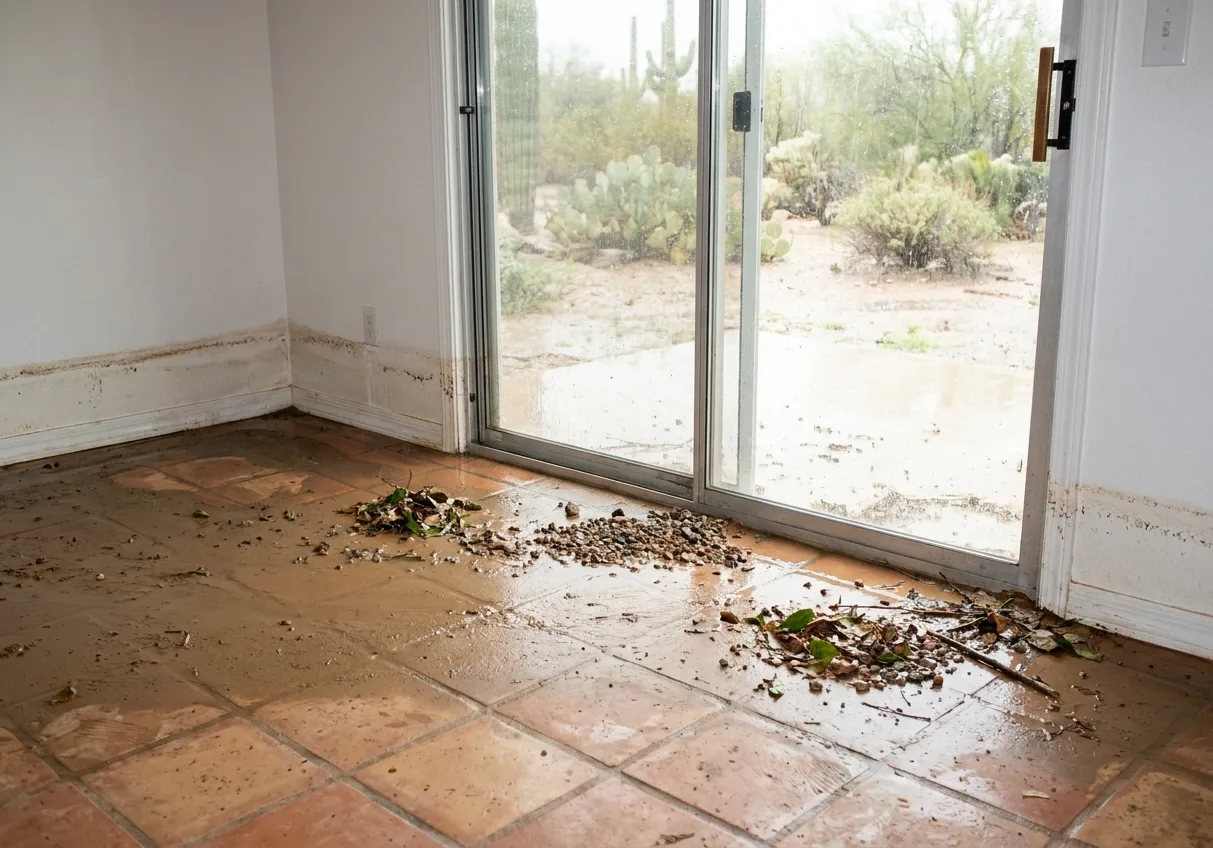
A summer thunderstorm can drop more rain in an hour than the ground around your house can absorb. The overflow follows the grade to the lowest threshold or garage seam and carries dirt, debris and street runoff inside, leaving a wet floor, a muddy line on the walls and a growing smell.
Our crew handles storm water differently from a leaking pipe. The IICRC S500 standard places water that crossed yards and pavement in Category 3, its most contaminated class. Porous items it touched usually come out, surfaces are cleaned and treated with an antimicrobial, and drying starts only after that material is gone.
This page covers what happens once outside water is inside: silt removal, tear-out, sanitizing, drying and documentation. We do not regrade lots or repair roofs, but we can show you where the water entered and share our photos with whoever handles that work before the next storm.
- Water Damage Restoration
- Water Damage Assessment and Inspection
- Insurance Claim Assistance for Water Damage Restoration
- Emergency Water Extraction Services
- Structural Drying Services
- Mold Removal
- Sewage Backup Cleanup
- Burst Pipe Water Damage Cleanup
- Slab Leak Water Damage Repair
- Water Heater Leak Cleanup
- Swamp Cooler & AC Leak Water Damage
- Roof Leak & Ceiling Water Damage Repair
- Wet Carpet & Pad Drying
- Hardwood Floor Water Damage & Drying
- Drywall Water Damage Repair
- Water Damage Odor Removal & Sanitizing
- Contents Pack-Out & Restoration
- Commercial Water Damage Restoration
- Water Damage Reconstruction & Rebuild
Our Monsoon Storm & Flood Damage Services
Mud, Silt and Debris Removal
Floodwater in the desert is rarely clear. It brings fine silt, caliche dust, gravel and whatever was lying in the yard. We shovel and squeegee out the heavy sediment first, then pump and extract the standing water so the floor can be cleaned down to its original surface.
Silt hides in grout lines, under baseboards and inside wall cavities, where it keeps holding moisture. We pull baseboards, scrub the exposed areas and bag the debris. Getting every bit of mud out is what keeps the room from smelling like a dry riverbed a month later.
Flood Cuts and Contaminated Material Removal
Drywall, insulation and carpet that sat in storm runoff cannot be sanitized reliably, so they come out. Our technicians make a level flood cut above the highest wet reading, usually a foot or more over the visible waterline, because gypsum wicks moisture upward past where the water stood.
Cabinet toe kicks, door casings and laminate get the same scrutiny. Some pieces can be cleaned and dried; others swell and delaminate. We photograph each item before it goes to the dumpster so your adjuster can see what was lost and why it could not stay.
Cleaning and Antimicrobial Treatment
With the walls open and the floor bare, we wash the framing, slab and remaining surfaces with a detergent solution, rinse and extract again. Then an EPA-registered antimicrobial goes onto the studs, bottom plates and concrete to reduce the bacteria and spores the runoff left behind.
Hard contents like metal furniture, sealed tile and glass can usually be cleaned on site. Soft goods such as upholstered chairs, mattresses and cardboard boxes that soaked in floodwater are generally discarded under S500 guidance. We sort the two groups with you and keep a written list.
Structural Drying After Storm Water
Once contaminated material is out, refrigerant dehumidifiers paired with high-velocity fans pull moisture from the framing, slab and remaining wall sections. Our crew checks every affected room with moisture meters and infrared imaging at each visit, logging them daily until every material reaches its dry standard.
Monsoon air is more humid than the rest of the Tucson year, so summer drying needs closer management. We keep the building closed and the dehumidifiers working instead of opening windows to the warm, sticky air outside. Our structural drying services page explains the equipment in more depth.
Our Monsoon Storm & Flood Damage Process
Safety Check and Water Entry Assessment
First we confirm the space is safe: power to wet outlets off, no sagging, no gas smell. Then we trace how water got in, whether under a door, through the weep screed at the base of the stucco or up through the garage, and photograph the high-water marks.
Extraction and Sediment Removal
Standing water is pumped and extracted, mud is removed by hand and squeegee, and wet contents leave the work area. Speed matters here, because silt sitting on tile or concrete starts to bond as it dries and is far easier to lift while still wet.
Tear-Out, Cleaning and Treatment
We make flood cuts, remove wet insulation, flooring and trim, then clean the exposed structure and apply antimicrobial. Everything removed is listed and photographed. The room ends this stage as clean framing and slab, ready for drying and free of that sour runoff smell.
Monitored Drying and Clearance
Dehumidifiers and air movers run while we log readings every day. When framing and slab meet their dry targets, we pull the equipment, take final photos and hand you a drying report, the document your contractor and insurer use to start putting walls and floors back.
Why Choose Us for Monsoon Storm & Flood Damage
We Treat Every Storm Loss as Category 3
Some companies dry storm water in place to save time. We follow the contaminated-water path from the start: remove porous materials, clean, treat, then dry. It takes more effort on day one and avoids the odor and mold that follow when muddy water is blown dry inside a wall.
Clear Paperwork for a Tricky Claim
Standard homeowner policies usually exclude rising surface water, while some storm damage may still be covered. We do not decide coverage, but we document entry points, water lines, readings and every removed item. Our insurance claim assistance page covers the next steps.
Daily Updates in Plain Language
During a busy storm week you hear from us each day the equipment runs: which rooms are dry, which are still wet, and what comes next. If something changes, like wet insulation found behind a cabinet, you hear about it before we act, not on the invoice.
How Monsoon Flooding Reaches Tucson Homes
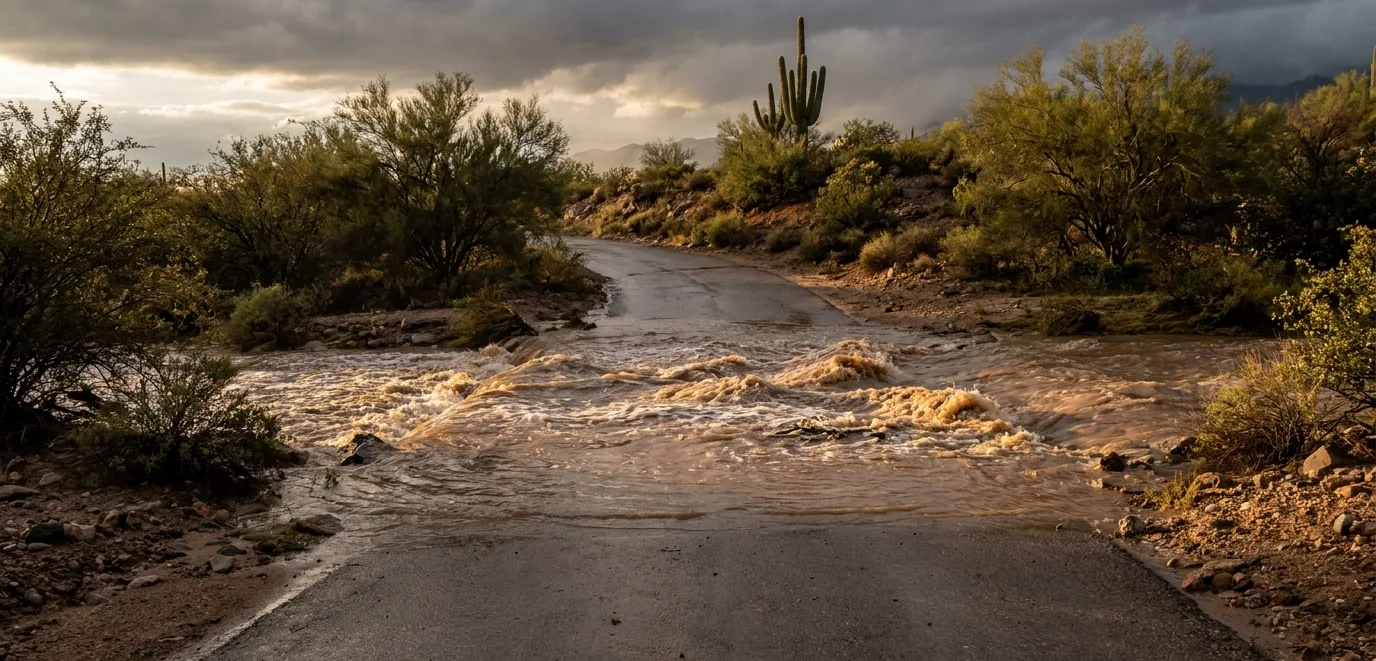
The National Weather Service defines the monsoon as June 15 through September 30, and NWS Tucson lists the city's average rainfall for that period at 5.69 inches. Much of it arrives in short, violent cells that NWS says can drop rain around 4 inches per hour, and hard caliche soil sheds that water quickly.
Pima County's flood control district describes sheet flooding, where water spreads across the land in a broad flow with unpredictable paths because washes are too small to carry it. The county also notes that many flood-damaged buildings sit outside mapped floodplains, and that regular homeowner policies usually exclude flood damage.
What Monsoon Storm & Flood Damage Restoration Costs in Tucson
Storm cleanup varies more than most water jobs because mud volume, water height and the number of rooms all change the labor. These typical Tucson ranges are not a quote; your written estimate follows a free inspection of the home.
The biggest price drivers are the water height on the walls, how much silt must be hauled out, and whether flooring and cabinets come out. Rebuilding is priced separately. Because surface-flood coverage differs by policy, call your agent early; our documentation answers the questions they will ask.
| Scope | Typical range |
|---|---|
| Monsoon or flood cleanup, most homes | $3,000 to $15,000 |
| Severe flooding, deep water or many rooms | $25,000 and up |
| Structural drying portion | Most jobs $1,500 to $6,000 |
| Inspection and moisture assessment | Free |
Monsoon Storm & Flood Damage FAQs
Can I just mop up the muddy water and run fans myself?
You can safely remove standing water from hard floors with the power off, but storm runoff carries bacteria from yards and streets. Drywall and insulation that soaked it up stay contaminated even once they feel dry, and fans can spread that material. Have porous materials assessed and removed before drying begins.
How much does monsoon flood cleanup usually cost in Tucson?
Most monsoon and flood cleanup jobs land in the $3,000 to $15,000 range, while severe flooding across several rooms can exceed $25,000. Water depth, mud, square footage and tear-out drive the figure. Our inspection costs nothing, and you get a written estimate before work starts, so the price never surprises you later.
Will my homeowner insurance pay for storm flooding?
It depends on how the water got in. Pima County notes that standard homeowner policies usually exclude flood damage from surface water, which needs separate flood insurance. Water entering through storm-damaged openings may be handled differently. We cannot promise coverage, but our records of cause and extent help your agent decide.
Why do you cut the drywall so far above the waterline?
Gypsum board acts like a sponge, drawing water upward through capillary action well beyond the mark you can see. If we cut only at the visible line, wet and contaminated board would hide behind the new patch. We measure with moisture meters and cut above the highest wet reading instead.
How long does it take to dry a house after a monsoon flood?
After tear-out and cleaning, most storm-flooded rooms dry in three to five days, though slabs and heavy framing can take longer. Monsoon humidity slows drying compared with the dry months, so we keep the house closed and let dehumidifiers work, stopping only when daily readings confirm every material is dry.
Find Us for Monsoon Storm & Flood Damage Restoration in Tucson
Get a Free Monsoon Storm & Flood Damage Restoration Inspection
Call any time, or send the form and we'll call you back.