
Tucson Water Damage Restoration Champions
Water Heater Leak Cleanup in Tucson, AZ | Tank & Tankless Leak Drying
From drain valve drips to ruptured tanks, we dry whatever the heater soaked.
- Free inspection
- Direct insurance billing available
- IICRC-certified technicians
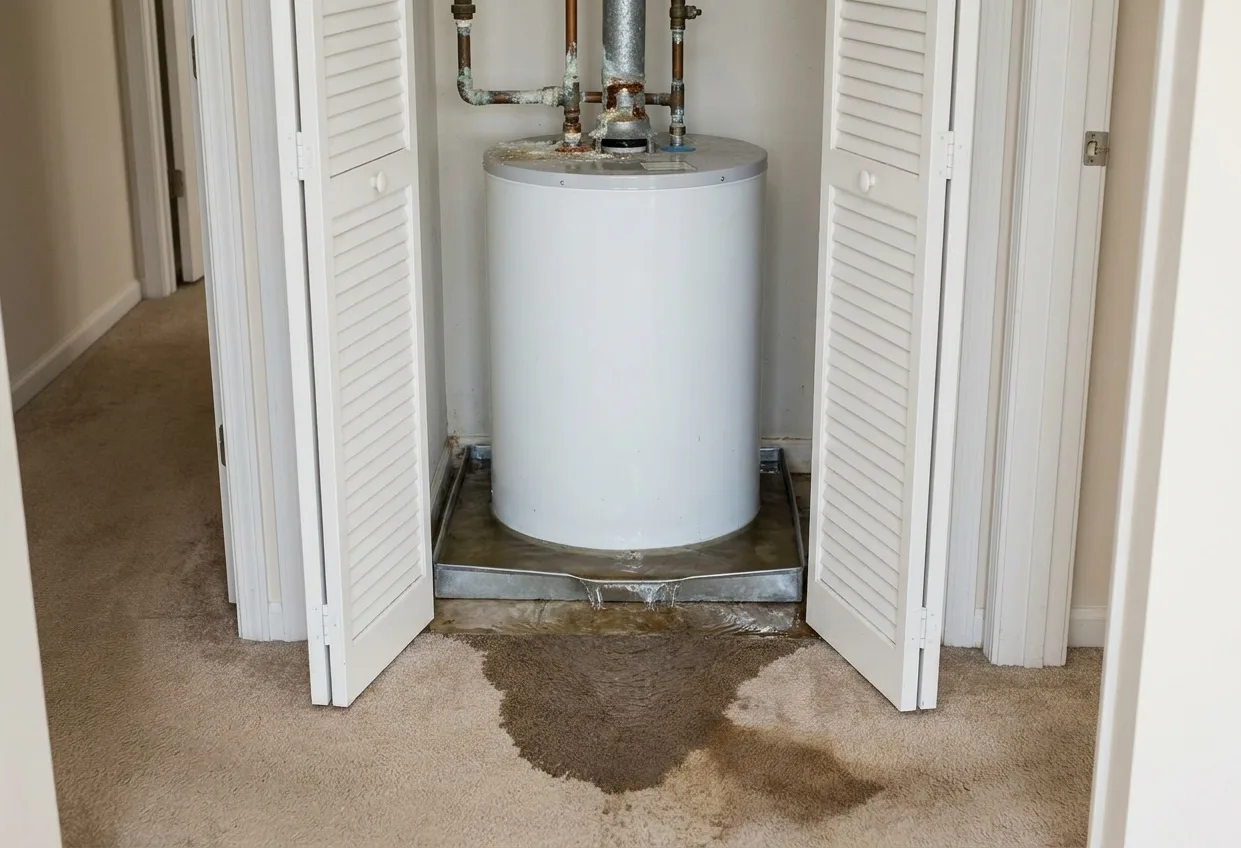
A water heater holds dozens of gallons under pressure and is connected to a supply line that never stops refilling it. When the tank wall corrodes through, it can empty onto the floor while the cold line keeps feeding more until someone closes a valve.
Not every leak is that dramatic. A weeping drain valve, a loose fitting or a relief valve that opens now and then can wet the floor for weeks before anyone looks behind the closet door. Slow leaks like these often cause more hidden damage than one large burst does.
We handle the water damage side after the heater is shut down. Your plumber repairs or replaces the unit; we extract the water, check the walls, subfloor and nearby rooms with meters, and dry everything back to normal readings, keeping records your insurer can follow.
- Water Damage Restoration
- Water Damage Assessment and Inspection
- Insurance Claim Assistance for Water Damage Restoration
- Emergency Water Extraction Services
- Structural Drying Services
- Mold Removal
- Sewage Backup Cleanup
- Burst Pipe Water Damage Cleanup
- Slab Leak Water Damage Repair
- Swamp Cooler & AC Leak Water Damage
- Monsoon Storm & Flood Damage Restoration
- Roof Leak & Ceiling Water Damage Repair
- Wet Carpet & Pad Drying
- Hardwood Floor Water Damage & Drying
- Drywall Water Damage Repair
- Water Damage Odor Removal & Sanitizing
- Contents Pack-Out & Restoration
- Commercial Water Damage Restoration
- Water Damage Reconstruction & Rebuild
Our Water Heater Leak Cleanup Services
Tank Rupture and Bottom Leak Cleanup
A conventional tank usually fails at the bottom, where sediment settles and corrosion works on the steel. We extract the water, lift wet hallway carpet and test the drywall behind and beside the unit, where water pools unseen. Leaks there rarely stop on their own.
Because tanks often sit in a closet against an interior wall, the water travels under that wall into the next room. We check both sides with meters and thermal imaging, remove baseboards to vent the cavity, and cut out lower drywall only if the insulation or bottom plate is soaked.
Relief Valve and Drain Pan Overflows
The temperature and pressure (T&P) relief valve opens when the tank gets too hot or the pressure climbs too high. Its discharge pipe should carry that water to a safe drain point, but a missing or badly routed line drops it on the floor. Repeated discharges can soak a closet without a single burst.
Drain pans catch small leaks, but a pan without a working drain line simply fills and spills. We dry around and beneath the pan, check the subfloor, and note the cause in our report so your plumber can address the valve, pressure or pan problem.
Tankless Water Heater Leak Drying
Tankless units hang on a wall and leak differently. Common failures are loose or corroded fittings at the water connections, a cracked heat exchanger, or a blocked condensate line on condensing models. These drips run down inside the wall, often without puddling on the floor.
We open or vent that section of wall, dry the framing and sheathing, and check the floor below for wicking. When the unit is mounted on an exterior wall, we also look for moisture traveling toward the stucco side, where a hidden wet spot can stain or loosen the finish.
Garage and Attic Water Heater Losses
In a garage, the slab sheds some water, but boxes, drywall on the shared house wall and anything sitting on the floor take the hit. We pull wet cardboard and contents, dry the wall separating the garage from living space, and check the doorway threshold for water entering the house.
An attic heater is the worst case, since a failed tank sends water straight through the ceiling. We drain the trapped water, remove soaked insulation and sagging drywall, and dry the joists and the room below. Ceiling damage may lead to structural drying across several rooms.
Our Water Heater Leak Cleanup Process
Shut Down Safely
If it hasn't already been done, we help you close the cold water inlet and turn off the gas or the breaker feeding the heater. Water from a failed tank can be scalding, so we let it cool before working in it. Then we photograph the unit and the surrounding damage.
Extract and Measure
We remove standing water from the floor, closet, garage or ceiling cavity, then map moisture with pin and pinless meters and a thermal camera. The map extends past what you can see, into neighboring rooms and wall cavities, so the plan matches where water went.
Open Up and Set Drying Equipment
Baseboards come off, toe kicks are removed and soaked materials are cut out when readings call for it. We set air movers and LGR dehumidifiers sized for the area, using injection drying for walls that can stay closed. A larger spill might start with emergency extraction.
Confirm Dry and Clear the Way
Each visit we record readings and adjust equipment. When everything matches unaffected materials, we remove the gear and hand over the moisture log. That timing works well with your plumber, since a new heater can go into a clean, dry closet instead of a damp one.
Why Choose Us for Water Heater Leak Cleanup
We Find the Water That Moved Under Walls
A leak from a closet heater rarely stays put. We measure the hallway, the neighboring bedroom and any room sharing that wall before we decide what needs drying. That step catches the soaked pad or swollen baseboard that would otherwise surface weeks later as an odor.
Straight Talk About Cause and Coverage
Insurers often cover sudden tank failures but exclude gradual leaks and the heater itself. We describe what we observe, such as corrosion at the base, staining patterns or a discharge line ending at the floor, so your claim reflects what actually happened. We never guess at a cause we can't see.
Drying You Can Follow Day by Day
You'll get a simple written record of each visit: where readings were taken, what they showed and what equipment changed. If anything is removed, it is photographed first. Homeowners tell us the log helps them talk with adjusters, and our claim assistance covers the rest.
Tucson Water and Your Water Heater
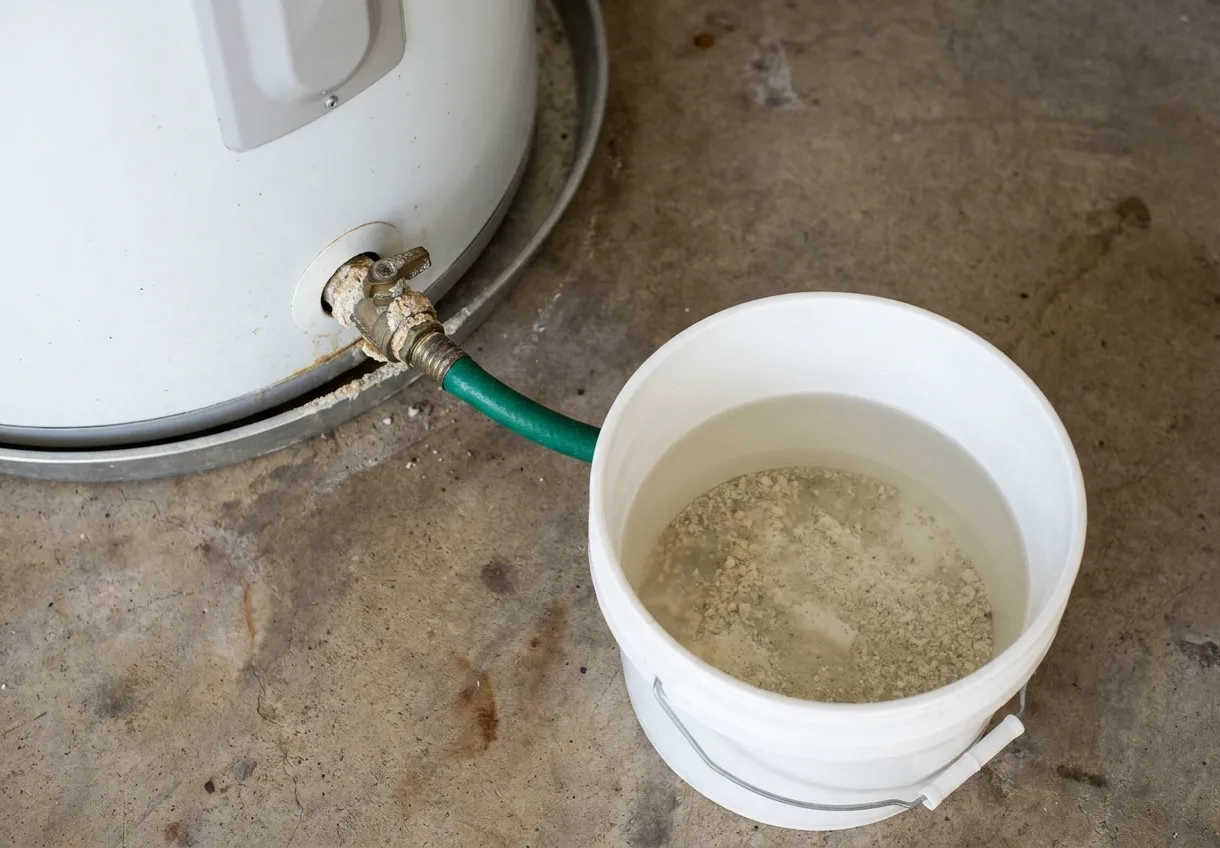
Tucson Water describes the city's supply as hard, the result of blending local groundwater with Central Arizona Project water, and lists water heaters among the appliances where calcium deposits build up and shorten service life. Sediment in the bottom of a tank is one reason heaters fail early.
Tankless heaters scale up too, which is why descaling is part of their maintenance. Location matters too: a heater in a garage or attic works through summer days with average highs between 98 and 102 degrees. A leak that starts in those spaces can go unnoticed because nobody spends time there.
What Water Heater Leak Cleanup Costs in Tucson
Most water heater losses stay moderate in size because the water usually starts clean and stays in a small area. Big jobs come from attic units and long-running slow leaks. These are typical ranges, not a quote, and they don't include replacing the heater itself.
A tank that emptied onto a garage slab sits near the low end. A closet leak that soaked the hallway carpet and two walls lands in the middle, and an attic failure through a ceiling runs highest. We start with a free inspection and a written scope.
| Scope | Typical range |
|---|---|
| Moisture inspection | Free |
| Water heater leak cleanup | Most jobs $1,000–$5,000 |
| Wet carpet & pad drying | Starting at $500; most jobs $500–$2,500 |
| Drywall repair after drying | Starting at $500; most jobs $1,000–$4,000+ |
Water Heater Leak Cleanup FAQs
What should I do when my water heater starts leaking?
Close the cold water valve feeding the heater, then shut off the gas valve or flip the breaker for an electric unit. Keep well away from any hot water near the base. Move belongings out of the way, and photograph the heater and every wet area before any cleanup starts.
How much does water heater leak cleanup cost in Tucson?
For most homes, water heater cleanup runs from $1,000 to $5,000 depending on how far the water spread. Garage leaks onto bare concrete stay lower, while attic tank failures that bring down ceiling drywall cost more. The heater replacement is billed separately by your plumber. We provide a written scope after a free inspection.
Why is water coming out of the pipe on the side of my heater?
That pipe is the discharge line for the temperature and pressure relief valve, and water there means the valve opened. Causes include excess heat, high household pressure, thermal expansion with no expansion tank, or a worn valve. It's a safety device, so have a plumber check it promptly rather than capping or ignoring it.
Can a tankless water heater cause water damage?
Yes, though usually more slowly. Fittings can loosen or corrode, heat exchangers can crack, and condensing models produce condensate that must drain properly. Because the unit hangs on a wall, leaks tend to run down inside the cavity. A stain or bubbling paint below the unit is worth checking with a moisture meter.
Is water heater leak water safe to clean up myself?
Water from the tank starts clean, but it can be very hot, and it picks up sediment and rust from the bottom of the tank. A small puddle on bare concrete is fine to towel up. If it reached carpet, drywall or a neighboring room, have the hidden areas measured,.
Find Us for Water Heater Leak Cleanup in Tucson
Get a Free Water Heater Leak Cleanup Inspection
Call any time, or send the form and we'll call you back.