
Tucson Water Damage Restoration Champions
Slab Leak Water Damage Repair in Tucson, AZ | Under-Slab Moisture & Flooring Recovery
Your plumber stops the leak under the concrete; we dry the slab, the walls and the floors it soaked.
- Free inspection
- Direct insurance billing available
- IICRC-certified technicians
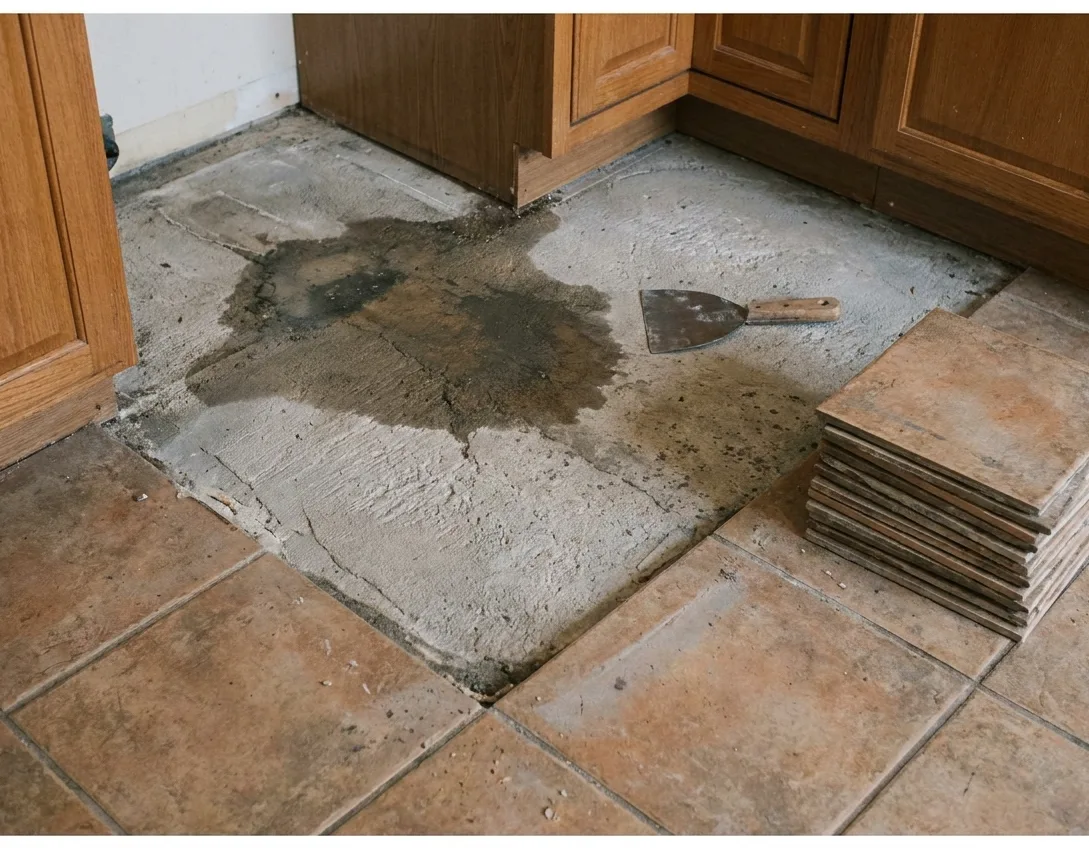
A slab leak is a break in a water line buried in or beneath a concrete foundation. Because the pipe is out of sight, the leak can run for weeks before anyone notices. By then water has spread under flooring, wicked into baseboards and drywall, and soaked the concrete itself.
Warning signs include a warm spot on tile, a water meter that moves with every tap off, a hissing sound near a wall, damp carpet with no source, or a sudden jump in your bill. Any one of these deserves a call to a plumber.
Finding and repairing the line is plumbing work, and we leave it to plumbers. Our job begins once the leak is located: removing flooring that can't be saved, drying the slab and lower walls, and documenting moisture so your floors are reinstalled on concrete that is truly dry.
- Water Damage Restoration
- Water Damage Assessment and Inspection
- Insurance Claim Assistance for Water Damage Restoration
- Emergency Water Extraction Services
- Structural Drying Services
- Mold Removal
- Sewage Backup Cleanup
- Burst Pipe Water Damage Cleanup
- Water Heater Leak Cleanup
- Swamp Cooler & AC Leak Water Damage
- Monsoon Storm & Flood Damage Restoration
- Roof Leak & Ceiling Water Damage Repair
- Wet Carpet & Pad Drying
- Hardwood Floor Water Damage & Drying
- Drywall Water Damage Repair
- Water Damage Odor Removal & Sanitizing
- Contents Pack-Out & Restoration
- Commercial Water Damage Restoration
- Water Damage Reconstruction & Rebuild
Our Slab Leak Water Damage Services
Working Alongside Your Leak Detection Plumber
Plumbers locate slab leaks with acoustic listening gear, line pressure tests and thermal cameras, then break through for a spot repair or reroute the line. We coordinate with their schedule so drying equipment isn't in the way and so any opened floor area gets dried before it is patched.
If you call us first, we can map the wet area with moisture meters and thermal imaging, which often helps the plumber narrow the search. We don't pinpoint the pipe itself, but we can show where water has spread and how big the restoration side will be.
Flooring Removal and Salvage Decisions
Carpet can sometimes be lifted back, the soaked pad replaced and the slab dried underneath it before anything is reinstalled. Tile on thinset may stay if still bonded, though hollow-sounding tiles usually come up. Laminate and other floating floors trap water and almost always need removal.
Glue-down wood and vinyl plank are judged by readings and by whether the adhesive has failed. We remove only the area that the moisture map supports, plus a margin to dry the edges, and photograph and measure each section so your claim matches what came out.
Concrete Slab Drying
Concrete absorbs a lot of water and releases it slowly, so a slab soaked for weeks won't dry in two days. Once the surface is exposed, we use LGR or desiccant dehumidifiers, low-profile air movers and, in some cases, drying mats that pull moisture up from the concrete under controlled airflow.
We measure the slab with a concrete moisture meter and, before sensitive floors such as wood or vinyl go back down, with in-situ relative humidity probes set into drilled holes. Flooring manufacturers publish moisture limits, and we dry until the slab meets the one for yours.
Baseboard, Drywall and Cabinet Drying
Water spreading across a slab reaches the bottom plate of every wall it touches, then wicks up the drywall and swells baseboards. We pull baseboards, check the wall with meters, and either vent the cavity or cut out the lower section when insulation or framing is wet.
Kitchen and bathroom cabinets sitting directly on the slab often hide the worst of it. We remove toe kicks and check the cabinet floors, then dry the space beneath. Cabinets that swelled badly are noted for replacement, but we always try drying first when the boxes are solid plywood.
Our Slab Leak Water Damage Repair Process
Moisture Mapping
We start with a free assessment, using pinless meters across the floor, pin meters on baseboards and drywall, and thermal imaging to find the wet boundary. That boundary goes on a floor plan sketch so you, the plumber and your adjuster see the same picture.
Controlled Removal
After the plumber has the leak repaired or safely isolated, we remove flooring, baseboards and drywall that the readings show are saturated or failed. Tile removal throws a lot of dust, so containment and HEPA vacuums keep debris out of the rest of the home.
Slab and Wall Drying
Dehumidifiers, air movers and drying mats run on the exposed slab while wall cavities get vented or opened. We check readings on a regular schedule, move equipment toward the wettest areas and track how fast the concrete is releasing moisture. Larger jobs follow our structural drying workflow.
Final Testing and Rebuild Plan
When drywall and framing are dry and the slab tests within the flooring manufacturer's limits, we pull the equipment and deliver the moisture log. Then we outline what needs to be replaced, from baseboards to the finished floor, so reinstallation can begin without guessing about hidden moisture.
Why Choose Us for Slab Leak Water Damage Repair
We Stay in Our Lane and Coordinate
We don't sell leak detection or pipe repair, so our advice about your home's floors carries no conflict of interest. We work with the plumber you choose, share our moisture map with them, and schedule drying around their repair without duplicated demolition or long gaps.
Concrete Tested Before Floors Go Back
Installing new flooring over a damp slab is one of the most common reasons replacement floors fail early. We don't call the slab dry by touch or by surface reading alone. Our final readings come from the concrete itself, and we give you the numbers to hand to your flooring installer.
Documentation That Fits How Insurers Handle Slab Claims
Many policies treat the cost of accessing and repairing the pipe differently from the resulting water damage. We keep our records focused on that resulting damage: affected rooms, removed flooring, drying logs and photos. For help with the process, see our insurance claim assistance page.
Why Slab Leaks Are a Tucson Problem
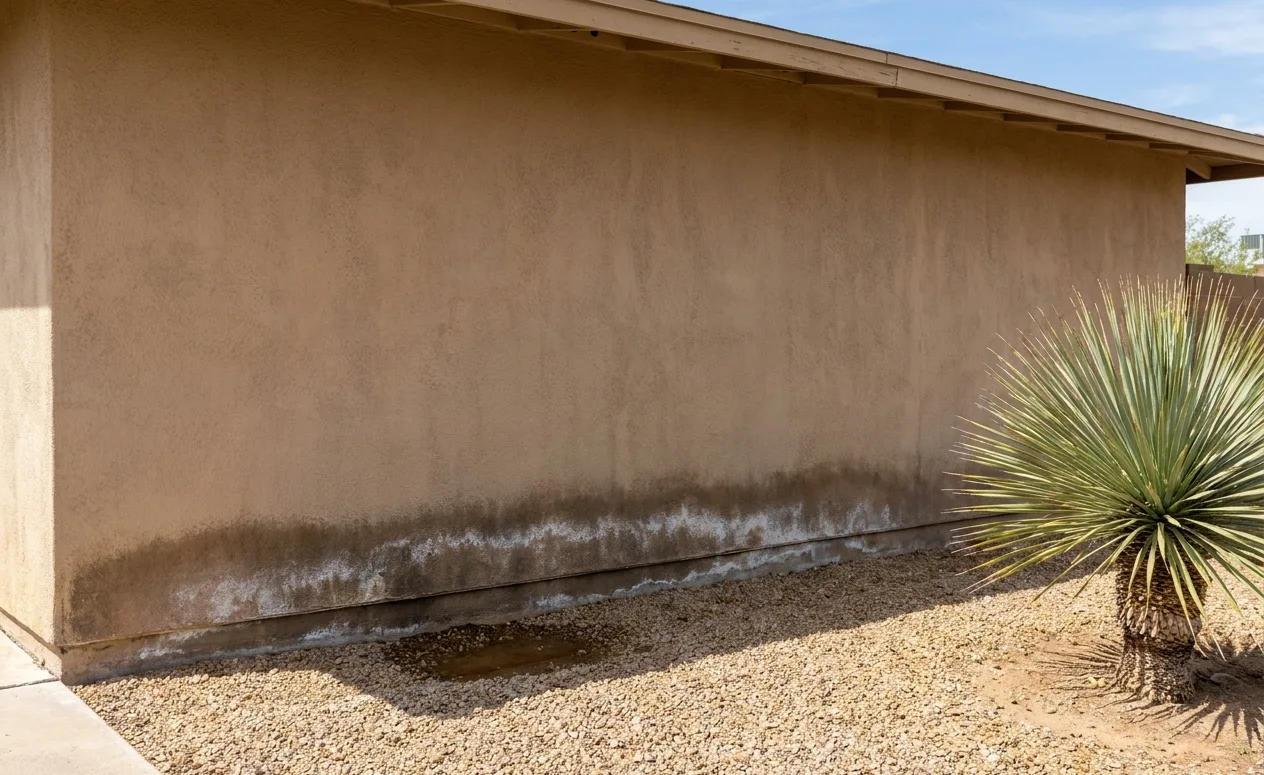
In a slab-on-grade home, water lines run through or under the foundation, so one failed joint can wet the floor across several rooms. Tucson Water explains that blending hard local groundwater with Central Arizona Project water raises mineral content, and that scale and wear add up on buried lines.
Our dry air can be misleading after a slab leak. Grout and the concrete surface may feel dry within days while the slab below keeps releasing moisture. Summer highs near 100 degrees warm the floor and drive that vapor into new flooring laid too soon.
What Slab Leak Water Damage Repair Costs in Tucson
Slab leak restoration usually costs more than a surface spill because the water has had time to spread and because flooring removal is often involved. The ranges below cover the water damage side only and are not a quote; the plumber's detection and repair are billed separately.
Costs climb with how long the leak ran, how many rooms share the wet slab and the flooring type, since tile takes more labor than carpet and wood adds drying time. Insurers often split coverage between pipe access and resulting damage, so ask your carrier how they treat each part.
| Scope | Typical range |
|---|---|
| Moisture assessment and mapping | Free |
| Slab leak water damage (excl. plumbing repair) | Most jobs $2,500–$10,000+ |
| Structural drying (equipment + monitoring) | Most jobs $1,500–$6,000 |
| Reconstruction / new flooring | Most jobs $5,000–$40,000+ |
Slab Leak Water Damage FAQs
Do you find the slab leak for me?
No. Locating and repairing the pipe is a plumber's job, done with acoustic and pressure testing gear. What we provide is a moisture map showing where water has spread across the floor and up the walls. That map often helps the plumber narrow things down, and it defines our drying scope.
How much does slab leak water damage repair cost in Tucson?
Most slab leak water damage jobs fall between $2,500 and $10,000, and some exceed that, especially when tile or wood across several rooms comes up. That figure excludes the plumber's detection and repair. Reinstalling flooring is separate rebuild work. We start with a free assessment and give you a written scope before work begins.
Can my tile floor be saved after a slab leak?
Sometimes. Tile that is still firmly bonded to the slab can stay while we dry the concrete around and beneath it, though drying through tile is slower. Tiles that sound hollow, have cracked or have lifted usually come up. We test each area rather than assuming the whole floor goes.
How long does a concrete slab take to dry?
It depends on how long the leak ran, the slab's thickness and what covered it. Lightly wet areas can dry within days, while concrete soaked for weeks needs much longer under equipment. We measure the concrete directly and keep going until it falls within the moisture limit your new flooring requires.
Should the plumber reroute the line or repair it in the slab?
That decision belongs to you and your plumber, based on the pipe material, its age and how many leaks the home has had. A spot repair breaks through the floor at the leak; a reroute runs new line through walls or the attic. Either way, we schedule our drying around the plumbing work.
Find Us for Slab Leak Water Damage Repair in Tucson
Get a Free Slab Leak Water Damage Repair Inspection
Call any time, or send the form and we'll call you back.