
Tucson Water Damage Restoration Champions
Hardwood Floor Water Damage & Drying in Tucson, AZ | Cupping & Crowning Recovery
Boards cupping or lifting after a leak? We dry hardwood in place with suction mats and track every reading.
- Free inspection
- Direct insurance billing available
- IICRC-certified technicians
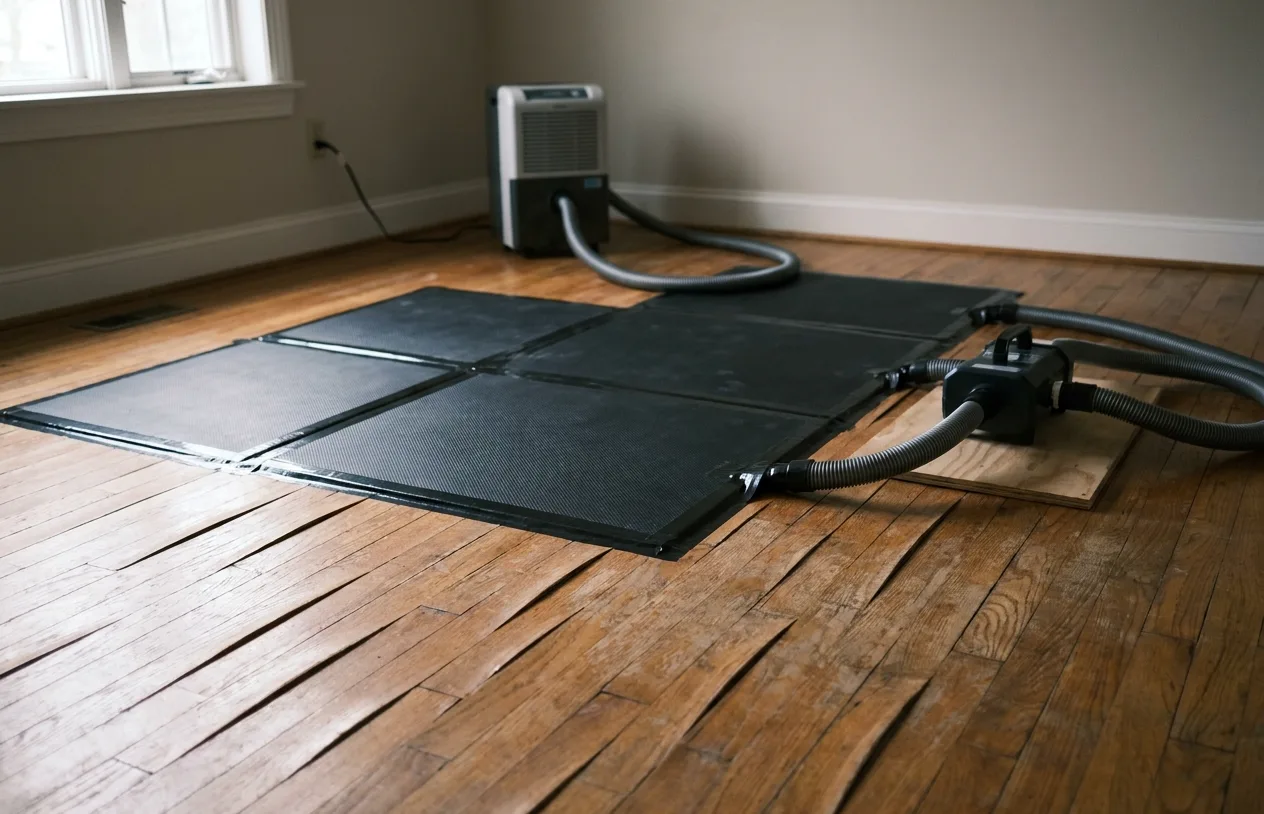
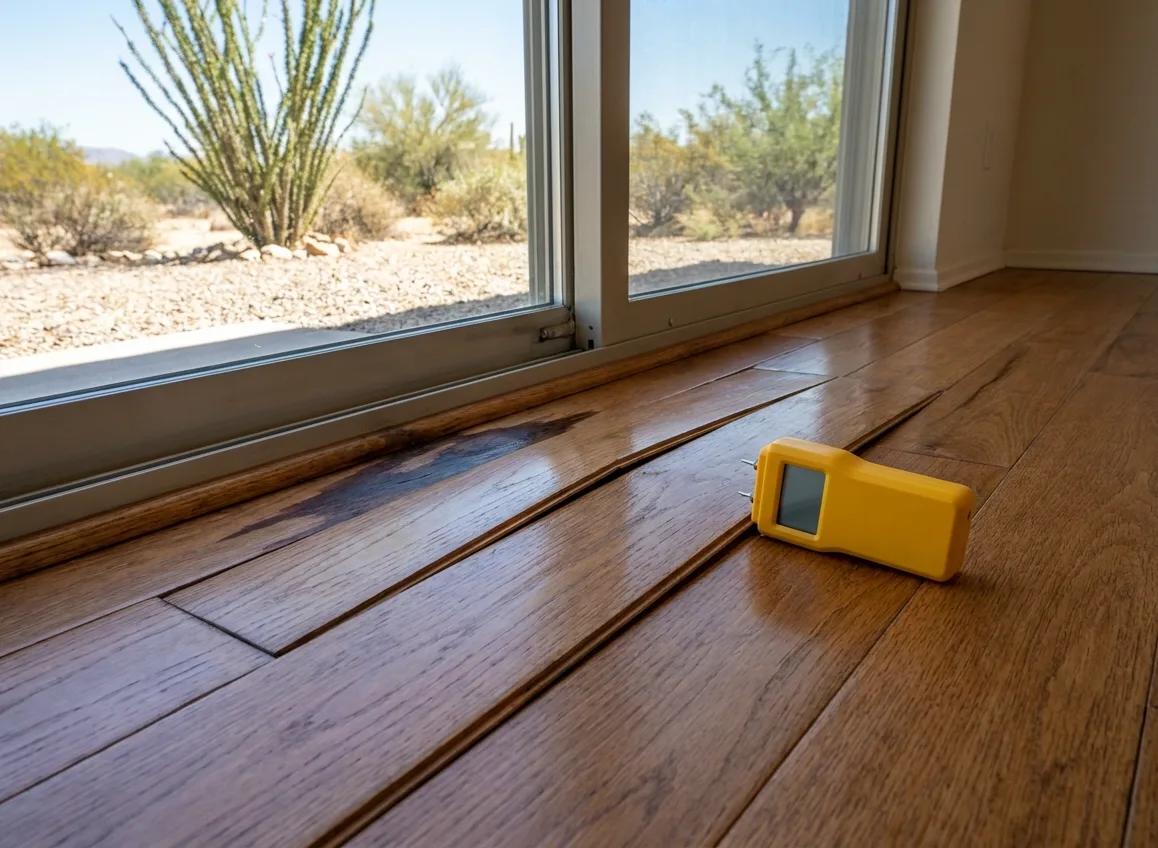
Wood flooring reacts to water quickly and visibly. Within hours of a leak, the edges of each board absorb moisture from below and swell, pushing the sides higher than the centers. That shape is cupping, and it tells you water sits underneath even after the surface is wiped dry.
Many cupped floors can be saved if drying starts early and is done correctly. The goal is to pull moisture out slowly and evenly so boards relax toward flat instead of cracking. That takes specialized equipment and patience, because rushing hardwood can do as much harm as leaving it wet.
We dry solid and engineered hardwood in place whenever the wood and subfloor make it practical. When boards are too far gone, we say so early, so you are not paying for days of drying that will not change the outcome. Either way, our readings show exactly where the floor stands.
- Water Damage Restoration
- Water Damage Assessment and Inspection
- Insurance Claim Assistance for Water Damage Restoration
- Emergency Water Extraction Services
- Structural Drying Services
- Mold Removal
- Sewage Backup Cleanup
- Burst Pipe Water Damage Cleanup
- Slab Leak Water Damage Repair
- Water Heater Leak Cleanup
- Swamp Cooler & AC Leak Water Damage
- Monsoon Storm & Flood Damage Restoration
- Roof Leak & Ceiling Water Damage Repair
- Wet Carpet & Pad Drying
- Drywall Water Damage Repair
- Water Damage Odor Removal & Sanitizing
- Contents Pack-Out & Restoration
- Commercial Water Damage Restoration
- Water Damage Reconstruction & Rebuild
Our Hardwood Floor Water Damage Services
Floor Drying Mat Systems
Hardwood drying mats are flat panels sealed to the floor and connected to a high-pressure vacuum or blower. Under suction, they draw moisture up through the seams and out of the wood, the subfloor and any gap between them, targeting the wet layer directly instead of just warming the room.
We pair the mats with dehumidifiers and gentle airflow to carry away what they extract. Panels are moved across the floor as each section improves. That lets us focus effort on the wettest boards while the rest of the floor dries on a slower, controlled curve.
Moisture Mapping Against a Dry Reference
There is no single correct moisture number for wood. Species, finish and climate all change what normal looks like. So we read unaffected boards elsewhere in the house and use them as the dry standard, then map the wet area with pin and pinless meters to see how far the damage reaches.
Readings are recorded on a floor sketch at each visit, and you can watch the wet-zone numbers fall toward the reference values. Drying stops when the wet boards match the dry ones, not when the calendar says it should or when the floor merely looks flat.
Subfloor and Slab Drying
Below the hardwood is either a wood subfloor or a concrete slab, and both hold water. If that layer stays wet, the boards keep cupping no matter how much air moves across the top. We check the subfloor where boards are lifted or through small, inconspicuous test holes.
Glue-down floors over concrete need extra care because adhesive can trap moisture against the slab. When boards must come up to reach the source, we lift as few as possible and save undamaged ones for reuse. Our structural drying page covers slab drying methods in more depth.
Cupping, Crowning and Refinishing Guidance
Once dry, many boards settle partly or fully back to flat, and a slight remaining cup can usually be sanded out. The mistake is sanding too soon. Sand a cupped floor while it is still wet and the raised edges get cut down; as it dries further, the boards crown, curving upward in the middle.
We recommend waiting until readings stay stable for a stretch before any sanding. When it is time, we explain what we see so your flooring contractor can choose between refinishing, replacing a few boards or replacing the room. Buckled boards lifting off the subfloor usually need replacement.
Our Hardwood Floor Water Damage Process
Assess the Floor and the Layer Beneath
We identify the floor type, solid or engineered, nailed, floated or glued, and what lies underneath. Reference readings come from dry boards, then the wet area is mapped. Cupping, buckling and finish damage tell us whether drying in place is realistic.
Remove Surface Water and Set the Mats
Water on the surface or in the seams is extracted, and rugs and furniture are moved off. Drying mats are sealed over the wettest sections and connected to the vacuum unit, with dehumidifiers placed to capture the moisture coming out of the floor.
Monitor and Adjust Daily
We return to read the boards and subfloor, move mats to new sections and adjust equipment as zones improve. Hardwood usually takes longer than drywall or carpet, and each check is compared against the dry reference. You get an update after every visit.
Confirm Dry and Plan the Finish Work
When affected boards match the reference readings, equipment comes out. We document the final readings and the shape of the floor, advise on a waiting period before sanding, and hand you the full drying record for your flooring contractor and insurer.
Why Choose Us for Hardwood Floor Water Damage
Controlled Drying, Not Forced Drying
Hardwood that dries fast on top while staying wet below can check, split or crown. We balance airflow, heat and dehumidification so drying stays gradual and even through the board. It takes longer than blasting fans, but it gives the wood its best chance to flatten.
Readings You Can Follow
Every visit adds to a moisture log tied to a floor map, showing reference readings, wet-zone readings and how they change day by day. If one area stops improving, we explain why and what we are changing, rather than simply leaving equipment running.
Help With an Expensive Flooring Claim
Wood flooring is costly to replace, so adjusters often want proof that drying was attempted. Our photos, readings and drying log show what was done and the result. If replacement is ultimately necessary, that record supports it and avoids back-and-forth.
Hardwood Floors in Tucson's Dry Desert Air
Tucson's indoor air is very dry most of the year, so hardwood here normally holds less moisture than the same floor would in a humid city. That makes the dry reference reading especially important. A target borrowed from a generic chart can leave boards wetter than they should be, and they shrink and gap later.
In slab-on-grade houses, wood floors sit directly over concrete with no crawlspace to ventilate. Moisture has to leave through the top of the floor, which is exactly the job floor drying mats are built for. Monsoon humidity slows that process, so summer jobs get a longer schedule.
What Hardwood Floor Water Damage & Drying Costs in Tucson
Hardwood drying costs more than drying carpet or tile because it needs mat systems and more days of monitoring, yet it usually costs far less than replacing a wood floor. Figures here reflect typical jobs rather than a quote; a written estimate comes after your free inspection.
Price depends on wet square footage, slab or wood subfloor, how long the floor was wet before drying began and how many boards must be lifted. Sanding and refinishing are separate. Sudden leaks are usually a covered loss, and our moisture log is the evidence insurers ask for.
| Scope | Typical range |
|---|---|
| Hardwood drying with mat systems | Most jobs $1,500 to $6,000 and up |
| Full restoration when flooring is replaced | Most homes $2,500 to $10,000 |
| Inspection and moisture assessment | Free |
Hardwood Floor Water Damage FAQs
Can a cupped hardwood floor go back to flat?
Often, yes. Cupping happens because the bottom of each board is wetter than the top. When moisture is pulled out evenly, many boards relax most or all of the way back, and a slight remaining cup can be sanded. Buckled boards that lifted off the subfloor rarely recover and are usually replaced.
How much does it cost to dry water-damaged hardwood floors?
For hardwood drying, most Tucson jobs land in the $1,500 to $6,000 range, and large or slab-mounted floors can exceed that. Square footage, what lies beneath the wood and drying time set the price. Refinishing is separate. You get a no-cost inspection and an estimate on paper before any equipment is set.
How long does hardwood floor drying take?
Hardwood dries slower than most materials. Many floors need several days to two weeks on mats, depending on species, thickness, subfloor and how long the water sat. We do not stop at a set number of days; we stop when affected boards match readings from dry boards elsewhere in your home.
Why shouldn't the floor be sanded right away?
Sanding a cupped floor that still holds moisture cuts down the raised edges. As the boards keep drying, the edges shrink and the middle ends up higher, which is called crowning. Waiting until readings hold steady for a while before sanding avoids turning one problem into another that is harder to fix.
Is engineered hardwood easier to save than solid wood?
It depends. Engineered boards are more stable, so they cup less, but their layers are glued and a long soak can make the top veneer separate. A thin wear layer also limits sanding. Solid wood swells more but can usually be sanded several times. We assess each floor on its own merits.
Find Us for Hardwood Floor Water Damage & Drying in Tucson
Get a Free Hardwood Floor Water Damage & Drying Inspection
Call any time, or send the form and we'll call you back.